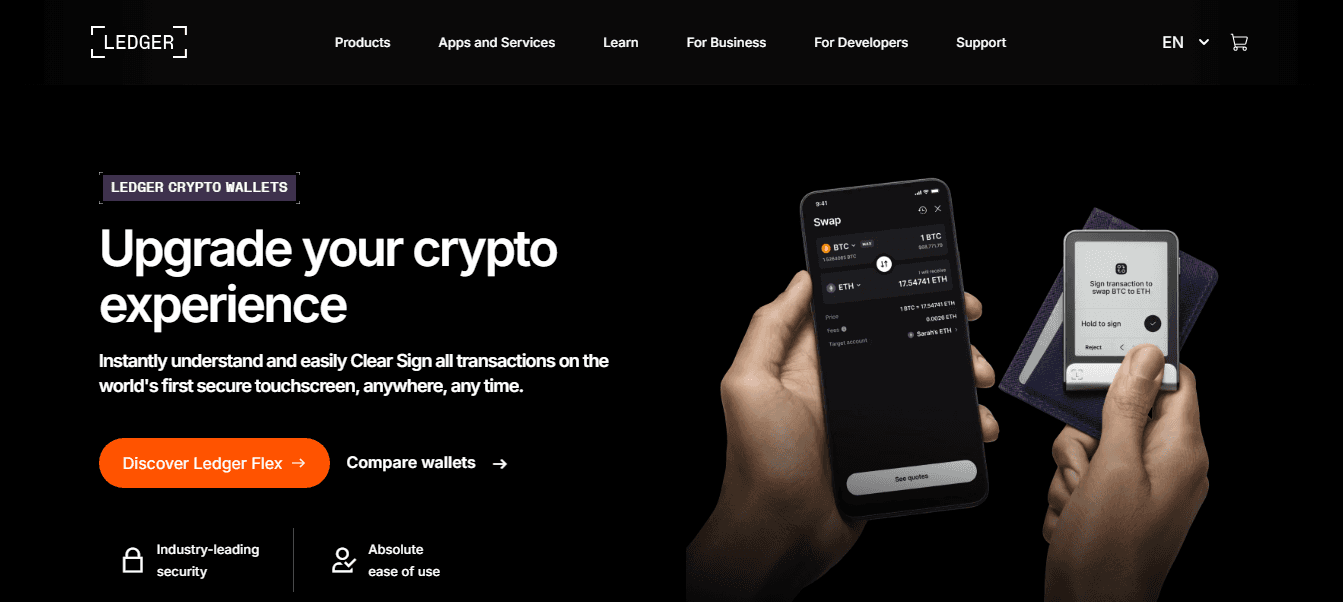
Ledger Login: How Secure Hardware Authentication Redefines Crypto Access
Introduction: What Ledger Login Really Means
Ledger Login is not a traditional login system. It does not involve creating accounts, storing passwords, or trusting centralized databases. Instead, Ledger Login is a hardware-based authentication method that allows users to access, manage, and authorize cryptocurrency activity through ownership of a physical Ledger device.
In a digital environment where most security breaches stem from compromised credentials, Ledger Login replaces weak authentication methods with cryptographic proof and physical confirmation. This approach ensures that access to digital assets is granted only when the user is present and actively approving actions.
This guide explores Ledger Login from a conceptual, technical, and practical perspective, explaining why it has become a cornerstone of secure crypto management.
The Philosophy Behind Ledger Login
At its core, Ledger Login is built on a fundamental blockchain principle: “Not your keys, not your crypto.”
Why Traditional Logins Fail in Crypto
Passwords can be guessed, reused, or leaked
Centralized servers can be hacked
Two-factor authentication can be bypassed
Ledger Login removes these vulnerabilities by ensuring that access is tied to cryptographic ownership, not digital identity.
Ledger Hardware Wallets as Login Devices
A Ledger hardware wallet is not just a storage tool—it is the authentication authority in the Ledger Login process.
What the Device Does
Generates private keys offline
Stores keys inside a secure element
Signs transactions internally
Requires physical approval
The device itself replaces usernames, passwords, and authentication apps.
Ledger Login Without Accounts or Registration
One of the most unique aspects of Ledger Login is the absence of account creation.
No Accounts Means
No emails to hack
No passwords to reset
No centralized user database
Ledger Login operates independently of Ledger servers. Even Ledger as a company cannot access your wallet or login credentials.
Ledger Live and Its Role in Login Access
Ledger Live is the software interface that works alongside Ledger Login.
What Ledger Live Is
A dashboard for crypto management
A communication bridge to the device
A transaction request generator
What Ledger Live Is Not
It is not a custody service
It does not store private keys
It cannot approve actions
Ledger Live only requests access; the Ledger device grants it.
How the Ledger Login Process Works Internally
Ledger Login involves a secure handshake between software and hardware.
Internal Login Sequence
Ledger Live requests device access
Ledger device requests PIN verification
Secure element unlocks key access
Device signs authentication request
User confirms on the device screen
This process ensures login integrity without exposing sensitive data.
Why Ledger Login Requires Physical Interaction
Physical interaction is not a limitation—it is a security feature.
Benefits of Physical Confirmation
Prevents remote attacks
Blocks automated malware
Eliminates silent approvals
No transaction or login can occur without user awareness.
The Role of the PIN in Ledger Login
The PIN protects the device from unauthorized physical use.
PIN Security Features
Required at every unlock
Limited attempts allowed
Automatic device reset after failures
Even if stolen, the device cannot be accessed without the PIN.
Ledger Login and the 24-Word Recovery Phrase
The recovery phrase is the backbone of Ledger Login continuity.
Why the Recovery Phrase Exists
Devices can be lost or damaged
Keys must remain recoverable
Ownership must remain portable
The recovery phrase allows users to recreate their Ledger Login on a new device.
Ledger Login Across Multiple Platforms
Ledger Login is platform-agnostic.
Supported Environments
Desktop computers
Laptops
Smartphones
Tablets
The security model remains identical because all sensitive actions occur on the hardware wallet.
USB and Bluetooth Login Methods
Ledger devices support both wired and wireless connectivity.
USB Login
Direct physical connection
Maximum stability
Common for desktops
Bluetooth Login
Encrypted communication
Mobile-friendly
Private keys remain offline
Connectivity method does not affect security strength.
Ledger Login for Sending and Receiving Crypto
Receiving crypto does not require login approval, but sending does.
Why Sending Requires Ledger Login
Prevents unauthorized transfers
Ensures correct destination
Blocks address-swapping malware
Users must verify addresses on the device screen before approval.
Ledger Login and Message Signing
Ledger Login also enables secure message signing.
Use Cases
Wallet authentication
Web3 identity verification
DAO voting
Message signing proves ownership without revealing private keys.
Ledger Login in the Web3 Ecosystem
Ledger Login plays a vital role in Web3 interactions.
Common Web3 Applications
Decentralized exchanges
NFT platforms
Blockchain games
Governance portals
Each interaction requires on-device confirmation, protecting users from malicious contracts.
Ledger Login with Browser Extensions
Ledger devices integrate with browser wallets for expanded access.
How Browser Login Works
Browser wallet sends request
Ledger device verifies request
User approves signature
The browser never sees the private key.
Security Layers Supporting Ledger Login
Ledger Login is not secured by one mechanism but many.
Key Security Layers
Secure element chip
Isolated operating system
Cryptographic verification
Firmware integrity checks
These layers ensure resilience against both digital and physical threats.
Ledger Login vs Cloud-Based Authentication
Cloud-based systems centralize risk.
Cloud Login Risks
Server breaches
Credential leaks
Insider threats
Ledger Login decentralizes risk by keeping authentication offline and user-controlled.
Common Ledger Login Misconceptions
“Ledger Login Uses the Internet”
False. Internet access is used only to broadcast transactions, not to store keys.
“Bluetooth Makes It Unsafe”
False. Bluetooth transmits encrypted public data only.
“Ledger Can Access My Wallet”
False. Ledger has no access to private keys or login authority.
Ledger Login Error Scenarios
Occasional issues can occur during login attempts.
Typical Causes
Outdated firmware
Faulty cables
Bluetooth interference
App version mismatch
These are operational issues, not security failures.
Ledger Login Recovery Scenarios
Recovery is a planned feature, not an emergency workaround.
When Recovery Is Needed
Device loss
Device damage
Forgotten PIN
Recovery restores Ledger Login without changing wallet ownership.
Ledger Login and Long-Term Asset Protection
Ledger Login is particularly effective for long-term holders.
Why Long-Term Users Prefer It
No dependency on companies
Immune to exchange shutdowns
Resistant to phishing
Assets remain secure even over many years.
Institutional Use of Ledger Login
Ledger Login is widely adopted beyond retail users.
Who Uses Ledger Login
Crypto funds
Treasuries
Family offices
Security-focused enterprises
Its auditability and offline security make it suitable for large holdings.
Best Practices for Maintaining Ledger Login Security
Recommended Habits
Store recovery phrase offline
Use trusted computers
Update firmware regularly
Review device prompts carefully
Security depends on both technology and user behavior.
What Happens If Ledger Stops Operating
Ledger Login is independent of the company’s existence.
Why This Matters
Keys are blockchain-based
Recovery works on compatible devices
No reliance on Ledger servers
Your login remains valid regardless of company status.
The Long-Term Future of Ledger Login
Ledger Login continues to evolve with blockchain technology.
Expected Innovations
Enhanced UX for beginners
Expanded smart contract clarity
Deeper Web3 integration
Improved accessibility
Despite advancements, the core principle remains unchanged: user-controlled authentication.
Conclusion: Ledger Login as a Security Standard
Ledger Login represents a paradigm shift in digital authentication. By eliminating passwords, accounts, and centralized tr